


The flames dance and flicker before you, illuminating the faces of your companions as the last trace of light disappears from the sky. A brisk chill reminds you that autumn is setting in, prompting you to reach for the jacket you brought “just in case.” This is the first time you’ve all been together as a group in quite awhile, but the closeness you’ve shared over the years makes it easy to pick right back up from where you all left off at the previous gathering. Conversation has turned to the highlights of the past year for each person in the group — topics range from travel adventures to relationship highs and lows to career-related struggles and aspirations. Unlike most others in the group, you’re devoting a substantial chunk of your time to what you’ve always dreamed of doing: saving and improving animals’ lives. Some people in the group share your love of animals, while others don’t quite understand it.
It’s now your turn to share a story or two with the group, and both the immense rewards and heartbreaking frustrations of the work you do spring to mind. How do you convey this to the group in a way that gives them a glimpse of how this feels in just a few minutes? How do you tap into the empathy of your fellow animal lovers while also providing the gift of insight to those who haven’t had occasion to give animals much thought? How do you impart the life-and-death urgency you face while still offering hope and keeping spirits high?
These are all questions around which to consider framing your organization’s messaging. Often, we get so wrapped up in the cause — which in and of itself is so absorbing — that we overlook the stories, which are among the most effective communication tools we have avaiable to both strengthen our bonds with existing supporters and acquire new ones. To some extent, we are all hard-wired to respond to stories: humans in every settlement on earth were exchanging them long before they could read and write, and we more naturally identify with individual characters than we do with the more abstract construct of entire groups. Fortunately, animal welfare and species conservation naturally provides an abundance of stories we can draw upon. Capturing that sense of fireside intimacy in which we assume the best of our audience, compel them to lean in closer, and end on a positive note is critical for building their trust and support.
We are fortunate enough to live in an age that offers great variety in both the vehicles through which we can tell our stories and the tools we can use to develop them. Whichever form(s) you use, make sure your story includes a call to action, an explanation of why and how the action should be taken, and current information that won’t expire quickly. It’s also critical to know your audience and tailor your messaging accordingly.
The Written Word
An organization that makes extensive and imaginative use of written stories is Rescue Operation for Animals of the Reservation (ROAR) (a program of National Relief Charities), an organization that rehabilitates and finds loving homes for stray dogs and cats on Native American reservations whose residents grapple with conditions of extreme poverty and limited access to medical care. ROAR takes a three-pronged approach to storytelling:
- Honoring the storytelling traditions of the cultures it serves by sharing Native American legends about animals.
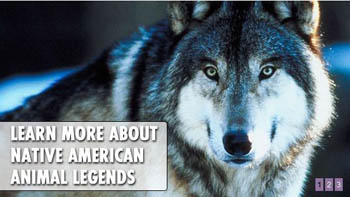
- Inviting web visitors to share their own stories about how the animals in their own lives have inspired them by creating a personal “Sage page” on the ROAR web site.
- Sharing ROAR’s own success stories about specific animals who benefited from the organization’s efforts.
For inspiration in placing your organization’s story within the context of overarching companion and wild animal protection issues, check out the Animal Legal Defense Fund‘s newly established and interactive Animal Book Club featuring a different book each month.
Photography
It’s often been said that a picture is worth a thousand words, and this is particularly the case when it comes to individual animals who either desperately need or were recently placed in forever homes. In the case of the former, the quality of a given photo can potentially determine whether a specific animal leaves a shelter alive; in the case of the latter, photo quality can determine whether — and to what extent — someone contributes money, wishlist items, and/or volunteer hours to the associated organization. Furthermore, photos are often a key component of videos, enhanced by motion effects, music and/or voiceovers, and text. So for all these reasons, it’s vital that photos make a strong impression on the viewer.
The One Picture Saves a Life project, sponsored by The Animal Rescue Site, Petfinder Foundation, John Paul Pet, and GreaterGood.org, is helping animal welfare organizations to make their photos the best they can be via a nationwide teaching tour — beginning on April 27 — to be conducted by renowned pet photographer Seth Casteel. The project web site includes video guides providing tips on pet photography and grooming. (See sample before-and-after picture below.)

At last month’s annual conference of the Animal Welfare Federation of New Jersey, which I luckily had the opportunity to attend, I grabbed a copy of the
Petfinder Foundation’s photo tip sheet (PDF) to serve as an additional resource.
Audio Podcasts
Radio-style interviews with those close to the work of an animal-oriented organization, or with its supporters and customers, can make for highly engaging stories that are relatively easy and economical to produce. All you need are a microphone, a quiet room free of ambient noise, a laptop, and sound editing software. Podcasts are a staple among many media consumers — they can be accessed from mobile devices or anywhere with an Internet connection, and their independence from any visual content makes them an ideal choice for folks who want to rest their eyes after a long day at work, or who want to undertake visual tasks while listening.
The audio podcast series “Take Me Home” on Pet Life Radio, hosted by National Association of Pet Rescue Professionals founder Susan Daffron, promotes pet adoption through conversations with guests from animal shelters and rescues about some of their favorite adoptable pets. Over 100 episodes are freely accessible to the public.

For those new to the world of podcasts, HowStuffWorks has conveniently provided the article, “How to Create Your Own Podcast” to help get you up and running.
Video
The power of video is in its multisensory nature; more of the brain is engaged in taking it in, and it is more memorable, than any other medium. And fortunately, advances in digital media technology in recent years have meant that creating high-quality video is relatively affordable these days. It is now common practice for organizations with modest budgets to shoot high-definition video with a smartphone or standard digital camera and an inexpensive external microphone, and to edit the video with software on a laptop. All the necessary equipment can be had for less than $5,000 and be useful for up to 5 years. Furthermore, nonprofits can receive deep discounts on both hardware and software through organizations such as TechSoup.
The ASPCA’s Pro web site offers a blog post on “Nine Do’s and Don’t’s for creating Ah-mazing Adoption Videos,” which includes three shelter videos that exemplify its various recommendations, as well as a “Slammin’ Shelter Video Roundup,” which includes a link to the clip below from Rockwall PAWS:
At last month’s annual conference of the Animal Welfare Federation of New Jersey, I grabbed a copy of the Petfinder Foundation’s video tip sheet (PDF) to serve as an additional resource.
Nonprofit technology consulting firm Idealware provides some advice on crafting short video story arcs in its article “Three Acts in Three Minutes: Screenwriting for Nonprofits,” which uses the formula for a typical Hollywood script as a starting point for creating nonprofit-focused videos.
Arts in Action LLC gave an excellent 90-minute presentation on digital storytelling through video that I had the good fortune of attending at the annual conference of the Grants Managers Network held in Florida last month — in fact, it was the inspiration for this post. While the presentation was geared primarily towards funders and was not animal-oriented, its takeaways can be easily applied to a variety of organizations. Parts 1 and 2 of the presentation are publicly available, as are templates for model release forms to be signed by individuals appearing in videos and for creating storyboards that serve as the basis for videos.
A recent boon for the entire animal welfare community is a PBS television series called “Shelter Me” celebrating shelter pets everywhere. The series is helping to both raise the profile of adoption as a desirable option and provide a richer context for shorter, organization-specific videos.
“Shelter Me” Episode 1 trailer:
“Shelter Me” Episode 2 trailer:
More information on creating powerful videos can be found through the Center for Digital Storytelling, which provides resources for the creation of online media that leads to learning, action, and positive change. Free offerings on its web site include featured digital stories, a blog, a newsletter, and case studies — all of which can help spark ideas and demonstrate the current state of the art. The organization’s fee-based offerings include training workshops, publications, and customized storymaking and story distribution services.
Storytelling Grant Opportunity
Feeling inspired? Ready to create or spruce up a story on behalf of your organization? We-Care.com’s Untold Story Grant Giveaway is awarding 1 grant of $10,000 and 2 grants of $5,000 to help nonprofit supporters and representatives tell their untold stories of impact and change through social media. Grant funds will enable each of the three recipient organizations to present their untold stories in a new way. Applicants must include a 1,000-word written description or link to a 20-second YouTube or Vimeo video about how a social media grant would help their organization to tell an “untold story.” The application deadline is May 31, 2013.
Have you found any other storytelling resources that might be especially useful to animal welfare organizations? Feel free to comment and share!
Filed under: Uncategorized | Leave a comment »


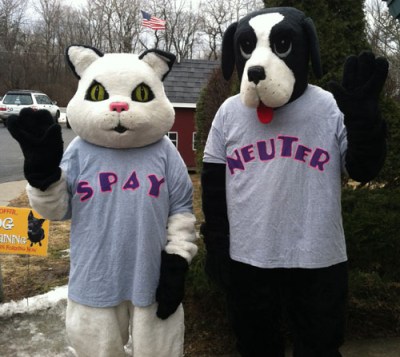
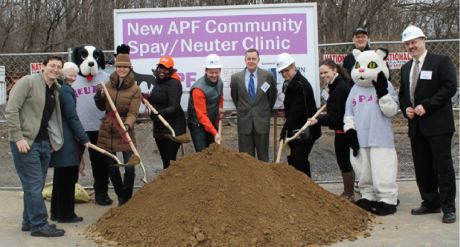
 APF put a lot of careful thought and planning into the event, which was reflected at every turn. The organization's board, staff, and volunteers were so gracious and hospitable; meeting them face-to-face was a delight. While recognizing that the issue of pet overpopulation and the associated need for more spaying/neutering are very serious, APF was able to frame this event as a celebration — more spaying and neutering = more animals' lives saved over the long term — and to inject some fun into the proceedings. This friendly fellow pictured at left greeted and directed us as we pulled into the parking lot.

 The Lion's Share
