Just as the 2011-12 school year is revving up, new announcements of grants supporting animal welfare work are being posted:
The Morris Animal Foundation is issuing special grants of up to $70,000 over two years to support research studies that address the issue of unwanted horses in the United States. Studies must focus on identifying geographic, socioeconomic, and other characteristics associated with relinquished horses and their former owners, as well as on describing the economic implications of this issue and the impact of potential solutions including educational and awareness-building programs. Submissions of funding requests must follow the foundation’s application guidelines and are due September 12, 2011.
ConocoPhillips and the National Fish and Wildlife Foundation recently teamed up to launch The SPIRIT of Conservation Migratory Bird Program, which provides grants ranging from $25,000 to $200,000 for bird conservation projects in ConocoPhillips’ areas of operations. Projects must benefit migratory birds and their habitats, with strong preference given to projects that provide opportunities for employee participation and volunteerism. Eligible applicants include nonprofit 501(c)(3) organizations, educational institutions, and local and state units of governments. All grant awards require a minimum 1:1 match of cash or contributed goods and services, of which at least 50% should be from non-Federal sources. Letters of intent are due on October 5, 2011, and full proposals invited from finalists must be received no later than December 3, 2011. See the program’s complete guidelines for further information.
Through its Michelson Graduate Student Challenge, the Found Animals Foundation will award $15,000 grants to three graduate students at accredited U.S. institutions working toward development of a non-surgical method of cat and dog reproductive control to reduce shelter euthanasia and animal/human suffering worldwide. The application deadline is January 15, 2012, and the foundation’s Web site includes details regarding the application process. The three Challenge winners will be eligible to apply for the Michelson Prize in Reproductive Biology—which includes an award of $250,000 per year for three years—in the event that their research generates a product or technology that meets all Prize criteria.
The opening of Rise of the Planet of the Apes earlier this month gave a much-needed boost to the work of individuals and organizations raising awareness about the perils of animal testing for both animals and humans. In addition to providing a gripping plot, stunning special effects (most of the scenes involving primates were digitally generated), and an engaging, sympathetic protagonist in the form of a precocious chimpanzee named Caesar, Apes serves as both a cautionary tale and an invitation to deepen our understanding of primate intelligence and social structure.
Thanks to the vision and talents of the Apes team, that may no longer be the case. With the film ranking #1 in the box office on both weekends following its opening, the twin issues of animal experimentation and primate exploitation have been placed squarely before well over a million viewers and counting—undoubtedly including many who might not otherwise give much thought to animal welfare or the way medical research is conducted. Few documentaries ever attain this kind of reach or visibility for their subjects. This “educate ’em a little, entertain ’em a lot” model presents a golden opportunity for animal welfare organizations to advance their work by encouraging the public to take the film’s messages to the next level.
This naturally leads to the question of how to effectively fund efforts to curtail animal experimentation. Beyond individual donors, relatively few entities exist that make grants solely for this purpose, but the good news is that money is in fact available from foundations that promote animal welfare more broadly. One of the most effective strategies to track down these sources is to consult the Foundation Center’s Foundation Directory Online, available for free use in the Center’s regional library/learning centers and Cooperating Collections, or via subscription. In addition to exploring the grantmaker database, a search of the grants database may be even more fruitful. Entering an organization such as the Physicians Committee for Responsible Medicine or the Jane Goodall Institute into the grant recipient field produces a list of donors whose in-depth profiles, guidelines, and Web sites can advise you regarding specific funding interests.
[7/9/13 UPDATE: Less than two years since the “Apes” release in theaters, major strides have been taken towards improving chimpanzee welfare. An article in today’s New York Times called “Unlikely Partners, Freeing Chimps from the Lab” describes two monumental developments: 1) The U.S. Fish & Wildlife Service’s recent proposal that all chimps be classified as “endangered” rather than “threatened,” which would largely prohibit their use in labs, and 2) The National Institutes of Health’s intent to retire the overwhelming majority of its lab chimps to sanctuaries within the next few years. While this victory is not complete as some chimps remain unprotected, it constitutes a giant leap forward for animal welfare advocacy. So close on the heels of when “Apes” first brought its potent mix of spectacular entertainment and incisive commentary to the big screen, I’m left to wonder: Do strong films help to drive social change, or do they merely reflect a significant shift in public consciousness that’s already taken place? Perhaps in this case, it’s a bit of both.]
A few new funding opportunities have cropped up along with the summer vegetation:
Planet Dog Foundation is currently accepting applications from organizations operating service-oriented canine programs throughout the U.S. that train, place, and support dogs that help people in need, such as assistance dogs, therapy dogs, search and rescue dogs, or police, fire, and military dogs. Grants will not exceed $7,500 per recipient, and preference will be given to programs that are able to creatively serve multiple populations or otherwise maximize the value of these modest grants. The application deadline is August 12, 2011. Planet Dog’s Web site provides complete guidelines and an application form.
Animal Welfare Approved (AWA)—a division of the Animal Welfare Institute (AWI) devoted exclusively to auditing, certifying, and promoting family farms that raise their animals in a manner consistent with the highest welfare standards—is providing grants to AWA-certified farms, farms that have completed an application to join AWA, or slaughter plants that are working with an AWA farm and/or have consented to be reviewed by AWA. Grants must be used for the sole purpose of improving farm animal welfare. Preference will be given to projects with the greatest potential impact for improving farm animal welfare, affecting the largest number of animals, and/or resulting in the most significant increase in welfare benefits, as well as to projects that develop innovative practices that may be applicable to other operations. Grants will be made at a maximum of $5,000 each, and the application deadline is September 30, 2011. Detailed guidelines on the AWA Web site provide more specific information.
The American Society for the Prevention of Cruelty to Animals (ASPCA) is making emergency grants to qualified animal welfare organizations—either nonprofit or governmental—directly affected by and/or responding to natural or human-caused disasters in their communities and in need of immediate funding. Application guidelines are available on the ASPCA’s Web site.
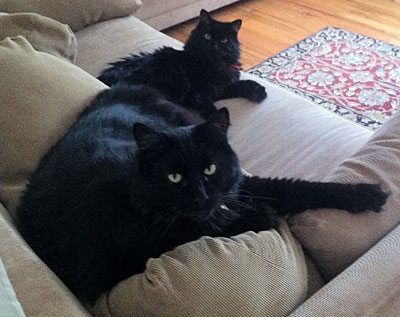
This blog has been far more quiet lately than I would like it to be, but don’t be deceived by the silence — I’ve got quite a few ideas for posts lined up, and hope to return to a more frequent publication schedule soon. Part of the challenge lies in having a very time- and energy-intensive job, but during the past couple of months, there’s been another complicating factor: my husband and I just became new cat “parents” to a brother-sister pair of 7-year-old Maine Coon–Bombay mixes adopted from the East Brunswick, New Jersey-based Animal Rescue Force (ARF). The cats’ previous owner passed away, unbeknownst to all but them for a few days, and they had nowhere to go. Luckily, a neighbor was kind enough to direct them to ARF’s care rather than sending them to the local pound, where they might have met a swift and tragic end. The sad truth is that adult cats are much more difficult to place than kittens, and finding good homes for black cats is more difficult still (which seems hard to believe, but is a well documented fact). While many people have told us how lucky the cats are to have wound up with us, we feel that we are actually the lucky ones. Our new charges are affectionate, healthy, beautiful, and a source of endless entertainment. Welcoming them into our family and acclimating them to their new surroundings has been a joy, and also quite a distraction! So, I’d like to introduce you to our little (well, not so little — they weigh in at close to 15 pounds each) sources of distraction, Tartufo (“Tufo,” front) and Tiramisu (“Missy,” back), known collectively as Team Dolci. It’s challenging getting them to sit still long enough to snap a decent picture, but this is the closest we’ve come so far:
With the arrival of spring comes new funding opportunities for those helping animals:
Two scholarships are available to enable fundraising professionals from low-budget organizations to attend skill-building conferences.
* The Association of Professional Researchers for Advancement (APRA) will award a scholarship of up to $1,000 to one of its members based on financial need and merit to cover the costs of registration, accommodation (up to four nights), and travel expenses for its annual conference in Austin, TX from July 27-30, 2011; guidelines and a link to the application form are available on APRA’s Web site; the deadline is April 29, 2011.
* The Greater New York Chapter of the Association of Fundraising Professionals (AFP) is providing a limited number of Maurice Gurin Scholarships of up to $450 to enable members who are new to the field and working at low-budget organizations to attend AFP’s annual Fundraising Day in New York conference on June 10, 2011; guidelines and a link to the application form are available on AFP’s Web site; the deadline is May 6, 2011.
To increase the number of veterinary researchers that can advance animal health and welfare, the Morris Animal Foundation and Pfizer Animal Health, together with cooperating academic institutions, are jointly providing fellowships of up to $60,000 per year for four years per student to help established scientists and veterinarians pursue a veterinary degree or PhD, respectively. Detailed guidelines cover eligibility requirements for prospective applicants and documentation to be submitted for consideration; applications must be received by May 23, 2011.
The Banfield Charitable Trust is accepting grant applications from organizations whose programs provide direct solutions to avoid separation of pets from their families due to financial hardship, serious illness or disability of a caretaker, problematic behaviors on the part of the pet, or a disaster. Please note that the Trust does not fund more than 50% of an entire project, as it expects to be one of many funding sources. Banfield’s grant guidelines and an application packet provide details regarding eligibility requirements and application procedures; the deadline to apply is June 30, 2011.
In the wake of the devastating tsunami and earthquake that struck Japan on March 11, 2011, a great number of organizations have been seeking and mobilizing funds for disaster relief efforts. While the majority of these efforts have (understandably) focused on human victims, several organizations have sprung into action to help animal victims as well.
There are many outside the community of animal lovers who may wonder why resources would be directed toward animal welfare in the midst of a catastrophe that has destroyed so many human lives and created such immense humanitarian need. An article on Japanese animal rescue efforts in The Wall Street Journal offers what is perhaps the best explanation, quoting the head of Niigata-based nonprofit organization Animal Friends Niigata: “Saving people is the first priority, but we should not forget [that] animals do provide mental support…Some people lost everything, from their families to their house, and are left with nothing but their pets.” In other words, helping animal survivors represents a complementary form of assistance to human survivors.
With that said, it’s hard to know exactly where to turn if one wants to learn about which organizations are engaging in animal rescue in Japan—whether in the form of providing financial support or putting it to good use—since this represents a relatively small proportion of overall relief. Fortunately, Kelly Garbato’s EasyVegan blog offers a comprehensive overview of organizations active in Japan’s animal rescue effort, including information about choosing a reputable charity. Those seeking complete objectivity should be advised that Ms. Garbato’s findings reflect a vegan perspective and are therefore filtered through that particular lens. Regardless, the level of research and care she has invested into creating this resource is clear and commendable—I’ve been unable to find anything else of comparable scope on the Web thus far. Vegans may be interested to know that Ms. Garbato has also provided some information about which of the organizations focusing on the purely human component of the relief effort do and do not utilize animal-based medications and/or fund animal testing or vivisection.
When one considers effective ways to advocate for the well-being of animals, the first things that come to mind usually include reaching out to congresspeople, donating to and volunteering at worthy charities, consolidating spending power to eliminate abusive industry practices, and signing petitions to help animal welfare and wildlife conservation groups lobby lawmakers in Washington—all of which are essential for success.
In recent years, however, an additional advocacy strategy is demonstrating large-scale success in directing the public consciousness toward wildlife conservation and animal welfare reform: documentary film. An Inconvenient Truth, one of the most successful U.S. documentaries ever made, opened people’s eyes to the impact of their actions on the environment and, among many other recognitions and nominations, received the 2007 Academy Award for Best Documentary Feature. Last year, that same award went to The Cove, a film that exposed the cruel treatment and slaughter of wild dolphins for meat—found to contain harmful levels of mercury—at a secluded, heavily guarded cove in Taiji, Japan.
With the 83rd annual Academy Awards airing this evening, the season for recognizing 2010’s most outstanding movies reaches its climax and provides a perfect opportunity to highlight another successful newcomer among animal advocacy documentaries. Equine Destiny, a collaborative effort between Change for Balance Productions in Irvine, California and the Huntington Central Park Equestrian Center in Huntington Beach, exposes the widespread abuse and slaughter of America’s horses happening largely outside of public awareness in the U.S. In addition to the four awards it won at the 2009 Los Angeles Reel Film Festival, the documentary short received 1st Place and awards for Best Visual Effects and Best Narration at the 2010 Los Angeles Movie Awards at the end of the year.
The Lion’s Share spoke with producer Adam Steel about fundraising for the film, viewing opportunities, how people can help horses, and his advice to other documentary filmmakers.
Claire Sterling, The Lion’s Share (TLS): It’s encouraging to hear that Equine Destiny has received so much recognition and acclaim at film festivals on the West Coast, and that the film is raising awareness about the plight of America’s horses. What opportunities are there for those of us in other areas of the U.S. to see the film?
Adam Steel, Change for Balance Productions (CFBP): We’re working with equestrian centers, equine rescue organizations, and the equestrian community around the country to host local private screenings of the film followed by Q&A sessions with a member of the Change for Balance team. We’re hoping to bring Equine Destiny to Long Island in the next couple of months. Our target audience is the non-horse-owning public, including those who aren’t necessarily “horse people,” because they have the most to learn about the issues explored in the film, and their involvement in helping to address these issues is critical. Our ultimate goal is to bring Equine Destiny to every TV in America in order to reach the broadest audience possible. We’re not selling the movie on DVD at this point so that we can retain exclusive rights and hopefully drum up support from more distributors and potential investors.
TLS: What kind of financial support did you receive for the film, and how did you go about raising the necessary funds?
CFBP: We were initially approached by Mary Behrens and her sister Carole Harris about creating this documentary. Mary owns and operates the Huntington Central Park Equestrian Center and helped found Red Bucket Equine Rescue. We weren’t aware of the issues facing horses at that time, but once we began to look deeper, we saw that this film really needed to be made. Mary and Carole provided all the funds to help us produce the film and truly inspired us with their passion for the issue.
It is without question that the success of a film depends on how well it is marketed. Ordinarily, the marketing budget for a film can far exceed the production cost, but we have had no marketing budget at all—our resources have run out—so as you can imagine, it’s been very challenging to spread the word. We have forgone receiving payment as filmmakers and have put all of our money back into the film. We’ve gotten lots of pats on the back for this film, but the unfortunate truth is that we haven’t gotten much financial support. We’ve been trying to market Equine Destiny for about two years using grassroots networking and social media, and now it’s up to people who care about these issues to take it to the next level.
People can donate to Equine Destiny through the Inter-Nation Cultural Foundation, which is a 501(c)(3) nonprofit organization. Contributions are tax-deductible, and 90% of the funding we receive for Equine Destiny goes towards marketing the film, which will in turn support horse rescue and education. The remaining 10% of our funding pays for essential services from CPAs and others—the executive director doesn’t take a salary. Transparency is very important to us, so information about 100% of the dollars we spend is available to all our donors.
TLS: In what other ways can people get involved in helping to create a brighter future for America’s horses?
CFBP: People can make a big impact by volunteering with horse rescue organizations in their area. In addition to needing money, these facilities really need people’s time in order to carry out their operations, and they can’t necessarily afford to hire staff. We’re also looking for sponsorship opportunities with companies whose products are useful to the equestrian community, and we’re working to get endorsements from celebrities who own or work extensively with horses—we hope that future screenings of Equine Destiny will encourage people to bring contacts to the table.
TLS: What advice would you give to other documentary filmmakers who may be inspired to follow in your footsteps?
CFBP: First of all, patience and perseverance is key—the notion of overnight success is a myth. Like anything in life, it takes a lot of time and energy to master a skill, so if you’re not willing to truly invest yourself in the craft, you are wasting your time. You can’t please everyone, so don’t be deterred by naysayers—no matter who criticized or doubted what we were doing, we forged ahead and still managed to pull it off. If you have the mentality that you will be successful and not be attached to a time frame, you will succeed.
Second, you should surround yourself with like-minded people who have the same mission and drive. We firmly believe in “collaboration, not competition.” By combining your talents with others, you will be much more effective in your process and will be able to cover more angles necessary in producing a film.
Third, production value in filmmaking and standards for what audiences expect today are very high, so be sure to use quality equipment—it’s essential for getting people to take your work seriously. The good news is that quality cameras today are a fraction of the price they used to be while maintaining professional quality. But just because you have great equipment doesn’t mean you will automatically be a professional cinematographer or editor; experience and practice are the best teachers.
And lastly, don’t rush the release of the final product—you’ve got only one shot at it, so do it right! If you’ve been working on your film for six months and could still use more time to refine your technique or bring in additional expertise, it’s better to wait another six months and make it the best it can be. Be as professional as possible across the board.
At Change for Balance, we’ve gone on to create other documentaries and media productions, but that’s only one component of what we do. We see film as a way to initially engage people through entertainment, educate them about important issues, and ultimately move them to action. We work with nonprofit organizations and socially responsible businesses to help them raise awareness about their causes, spark discussions among the players involved, and advocate more effectively.
If you’re a filmmaker seeking funding for your project, here are some places to start:
Only organizations that are registered as 501(c)(3) entities with the IRS are eligible for foundation grants and tax-deductible contributions from individuals. Individual filmmakers or a production company that is not itself a nonprofit can team up with a fiscal sponsor—an organization that already has 501(c)(3) status and can accept contributions on the filmmakers’ behalf—as Change for Balance Productions did with the Inter-Nation Cultural Foundation.
Just within the past month, two large U.S. foundations have announced new documentary film and video funding initiatives: the Ford Foundation via its JustFilms program to support next-generation filmmakers working to address urgent social issues (press release) and the Howard Hughes Medical Institute via its new documentary film unit to create high-quality science features for television (press release).
The number of online resources I’ve recently encountered relevant to fundraising for animal shelters has reached critical mass—no time like the present to share them!
As far as grants are concerned, an excellent source of information is the Foundation Center’s new GrantSpace – Animal Welfare portal, which includes requests for proposals and news stories specifically related to animal welfare funding, facts and figures about foundation giving associated with animals/wildlife, sample animal welfare funding proposal documents, links to research reports related to philanthropy that benefits animals, information about the Foundation Center’s prospect research tools, answers to frequently asked questions, and more. One of the Foundation Center’s Cooperating Collections, the Grants Information Collection in the Memorial Library at the University of Wisconsin-Madison, also maintains a comprehensive listing of U.S. organizations that fund animal rescue and rehabilitation.
Online resources focused on other aspects of animal shelters’ fundraising needs are also available. The Animal Shelter Tips blog’s “Fundraising” section offers ideas for developing special events, engaging volunteers, securing corporate sponsorships, and using technology effectively. eHow’s article “How to Raise Money Online for an Animal Shelter,” most recently updated in December, provides general recommendations for goal setting, online donation software, charity shopping vendors, and the use of social media to publicize fundraising efforts. All these points require diligent research and careful planning in consultation with other sources.
During the past several weeks, quite a bit of press has been given to three celebrities who have committed time and financial resources to animal-related organizations. Paris Hilton—heiress to the Hilton Hotels fortune, known for her extravagant lifestyle, wild partying, and varied pursuits within the entertainment and fashion industries—recently revealed a more earnest side when she volunteered some of her 200 hours of community service to the Las Vegas-based Animal Foundation, which operates one of the busiest shelters in the U.S. and inspired her to adopt a 3-year-old Chihuahua in December. Also in the spotlight is Pamela Anderson, made famous by her numerous television and film roles and her tumultuous relationships, who has aimed for a higher purpose over the years by serving as an animal activist—the U.K. chapter of People for the Ethical Treatment of Animals (PETA) just named her its 2010 Person of the Year.
That being said, the ideal scenario for charitable organizations working with celebrities is being able to share the prestige generated when those individuals’ achievements within their chosen fields are widely honored and celebrated. Such was the case with Betty White, whose acting career extends more than sixty years and whose involvement with the Morris Animal Foundation—dedicated to advancing animal health and welfare around the world—spans close to forty. In December, the Associated Press voted her 2010 Entertainer of the Year, and the press release picked up by myriad news outlets nationwide mentioned White’s current role as trustee of the Foundation. This is bound to have a powerful positive impact on visibility and respect for the organization among the general public. White has been featured in promotional videos for the Foundation, which have most likely received far greater attention in the last several weeks. One such video is presented here:
Attracting and sustaining celebrity attention is no easy task, but fortunately, there are a few resources that offer insight for organizations hoping to give it a shot. Among the most useful is a Philanthropy Front and Center-New York blog post summarizing a panel discussion held at the Foundation Center-New York in October. Much of the advice shared at the event, “Star Power: Effective Engagement of Celebrities for Your Arts Organization,” is equally applicable to organizations working outside the arts, and can be easily adapted by those that improve the lives of animals. The Foundation Center’s GrantSpace Knowledge Base also features a resource-rich section dedicated to celebrities and philanthropy, providing an annotated listing of relevant books, articles, Web sites, and other tools, including the Foundation Center’s Celebrity Foundation Directory.
As the Academy Awards ceremony scheduled for Sunday, February 27 draws nearer, news coverage of celebrity giving is likely to expand, and with it, new opportunities for engaging entertainment icons in charitable efforts.
To everyone out there doing great work for animals: may 2011 be a successful year for you! Here are a few new funding announcements to help get things rolling in a positive direction.
The Cat Health Network—a collaborative effort of the American Association of Feline Practitioners (AAFP), American Veterinary Medical Foundation (AVMF), Morris Animal Foundation (MAF), and Winn Feline Foundation (WFF)—will supply genotyping arrays and re-grant a total pool of close to $100,000 annually to feline biomedical investigators conducting studies on the contribution of genetic factors to specific feline diseases. Funding requests must be submitted to the Morris Animal Foundation by March 1, 2011. A three-page MS-Word document providing in-depth application guidelines—including technical specifications, supplemental application materials, and proposal formatting requirements—can be downloaded from the Morris Animal Foundation’s Web site.
The Animal Welfare Institute is accepting applications for $10,000 grants through its Christine Stevens Wildlife Awards program to support breakthrough research focused on strategies and tools for managing wildlife conflict and conducting scientific studies of wild species in a humane, non-lethal manner. The application deadline is March 25, 2011; specific guidelines provide details regarding award eligibility, application materials, and past award recipients.
The USDA’s National Institute of Food and Agriculture (NIFA) offers a Veterinary Medicine Loan Repayment Program (VMLRP) providing up to $25,000 per year to large animal veterinarians practicing in rural areas identified as having shortages in veterinary service. The submission deadline is March 29, 2011; veterinarians interested in applying should consult NIFA’s detailed guidelines for applicants, which include eligibility requirements, loan repayment terms, an overview of the application review process, frequently asked questions, and more.
The National Fish and Wildlife Foundation is inviting the submission of preliminary funding requests relating to sea turtle research and conservation by April 1, 2011. Awards will be made as challenge grants (see previous post, “The rewards of challenge grants“) ranging from $25,000-$150,000, requiring a minimum of a 1:1 match of cash or in-kind services. Upon review of pre-proposals, the foundation will invite a select group of applicants to submit a full proposal describing their work in greater depth for further consideration. The foundation’s detailed guidelines list priority funding areas and eligibility requirements, and provide an overview of the grants process.


 The Lion's Share